
Why Tennis Is Good for Kids: Development & Wellbeing Benefits Parents Should Know
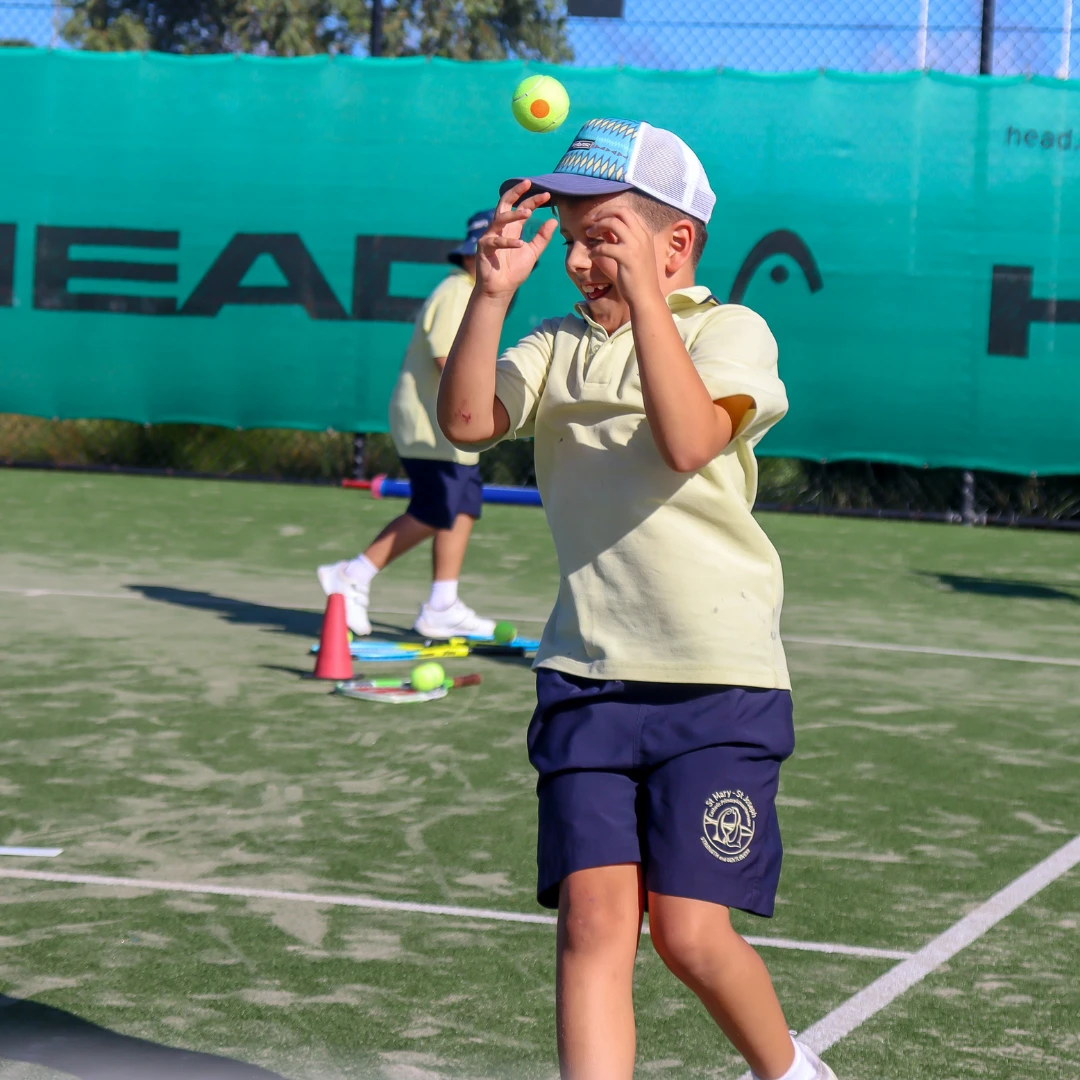
Parents ask us this almost as often as "what age can my child start": is tennis actually good for kids, or just another activity to fill an afternoon? The honest answer: tennis checks an unusually large number of developmental boxes at once.
Here's what tennis specifically develops in kids, backed by the actual research bodies behind it, plus where it does and doesn't outperform other common first sports like swimming or soccer.
What the Research Actually Says
The Australian Sports Commission's Physical Literacy Framework (the closest thing Australia has to an official standard for "what a physically capable, confident kid looks like") breaks development into four domains that a single tennis session genuinely touches all at once:
The skills and fitness a child builds through movement: a rally alone works coordination, footwork, and balance.
The confidence and motivation to keep being active: built through frequent small wins on court.
How kids interact with others during movement: turn-taking, encouraging a partner, sportsmanship.
Understanding how, why, and when to move: reading the ball and reacting in real time.
Separately, the International Tennis Federation's own research on children and tennis notes that middle childhood is a particularly important window for building coordination and complex technical skills through sport (ITF, Tennis & Children), which is exactly why programs like our Kinder Tennis and Launch Pad stages exist as play-based entry points rather than jumping straight into technical coaching.
Motor Skills and Coordination
Tennis is fundamentally a hand-eye coordination sport: tracking a moving ball, judging its speed and bounce, and timing a swing to meet it. That's a genuinely demanding cognitive-motor task for a young child, which is exactly why it builds those skills so effectively when introduced at an age-appropriate level (smaller courts, softer balls, shorter rallies). Beyond hand-eye coordination specifically, tennis also develops gross motor skills (running, changing direction, balance while swinging) and fine motor control through grip and racquet control.
Social Skills and Teamwork
Tennis has an interesting social profile: it's an individual sport in competition, but almost all junior coaching happens in groups. That combination means kids get real social benefits (taking turns, encouraging a rally partner, congratulating an opponent) without needing a whole team to structure a session around. Doubles play adds a genuine teamwork layer on top: communicating with a partner, covering court space together, and sharing responsibility for a point.
A Genuine Screen-Time Alternative
Australia's own 24-hour movement guidelines recommend no more than 2 hours per day of sedentary recreational screen time for children aged 5–17, no more than 1 hour per day for ages 2–5, and none at all under 2, alongside at least an hour of moderate-to-vigorous physical activity daily for school-aged kids (Australian Government Department of Health). A weekly tennis lesson doesn't single-handedly solve screen time, but it's a genuinely engaging alternative that kids ask to go back to.
Confidence Building
Tennis gives kids frequent, small wins (landing a serve in, winning a point, completing a longer rally than last week), which build confidence incrementally rather than all at once. Tennis also teaches kids to handle missing a shot or losing a point immediately, without the entire game stopping. Learning to reset after a mistake, on the very next point, is one of the more transferable resilience lessons a kid can pick up from sport.
Tennis vs. Other Sports for Kids
Parents often ask whether tennis is "better" than swimming or soccer as a first sport. The honest answer: it depends what you're optimising for.
Swimming is excellent for cardio fitness and water safety, but it's largely solitary and repetitive. Tennis adds hand-eye coordination, social interaction, and game-based decisions.
Soccer is excellent for team dynamics and running fitness, but ball contact per child can be limited in a game. Small-group tennis guarantees far more individual ball contact per session.
Yes, most programs scale the court, ball, and racquet to a child's size and ability, which few other sports do this precisely for young beginners.
None of this means tennis should be a child's only activity. Cross-exposure to different movement patterns is good for kids generally. But as a first sport, or as one of two or three activities, tennis holds up well against the usual alternatives.
What We've Seen in Practice
"The developmental benefit we notice most isn't physical: it's how quickly kids start self-correcting. A child who's been rallying for a term will start adjusting their own position after a bad shot without a coach prompting them. That kind of independent problem-solving tends to show up in how kids handle setbacks outside of tennis too, not just on the court.
Getting Started at Heffron Park
If this has you considering tennis for your child, the practical next step is figuring out where they'd start:
The full breakdown of every stage in between, with session lengths and pricing.
A low-commitment way to trial tennis over a few days.
A gentler entry point for kids who'd do better with one-on-one attention first.
A fun, low-pressure way to try some friendly competition once your child has a few sessions under their belt.
Key Takeaways
- ●Tennis touches all four domains of Australia's Physical Literacy Framework in a single session.
- ●It builds hand-eye coordination and adaptable motor skills through unpredictable ball tracking.
- ●It offers real social and teamwork benefits without requiring a full team.
- ●A weekly lesson is a genuine, engaging alternative within Australia's recommended screen-time limits.
- ●It builds confidence through frequent small wins and teaches resilience after mistakes.
- ●As a first sport, tennis holds up well against swimming and soccer as a complement, not a replacement.
Frequently Asked Questions
Convinced tennis is worth a try?
The easiest next step is a trial session, not more reading. Book a free trial at Heffron Park in Matraville and see how your child takes to it.
Book a free trial →The Heffron Park Tennis Coaching Team runs the club's full Kinder Tennis through Squad pathway in Matraville, working with kids of every age and stage.